Understanding AI Animated Video Generators
As the digital landscape evolves, the demand for visually engaging content continues to rise. One of the most innovative solutions to meet this demand is the AI animated video generator, a tool that leverages artificial intelligence to simplify the video creation process. Whether you're a marketer looking to promote your brand, an educator trying to engage students, or a content creator seeking fresh ideas, understanding how to use an AI animated video generator effectively can be a game-changer. When exploring options, how to use an AI animated video generator provides comprehensive insights into creating compelling animated videos effortlessly.
What is an AI Animated Video Generator?
An AI animated video generator is a software application that utilizes artificial intelligence to automate the creation of animated videos. These platforms allow users to convert text prompts or images into animated scenes, complete with characters, dialogue, and sound effects. Unlike traditional animation, which can be time-consuming and requires advanced technical skills, AI generators provide an accessible way for anyone to create professional-looking videos.
Key Features of AI Animation Tools
- User-Friendly Interface: Most AI animation tools are designed with a focus on user experience, making them easy to navigate even for beginners.
- Templates and Assets: Many generators provide a library of templates, characters, and scenes that users can customize to fit their narrative.
- Voiceover Integration: AI tools typically include text-to-speech capabilities, allowing for seamless voiceover that matches the animation.
- Customization Options: Users can modify colors, animations, and transitions, enabling creative flexibility.
Benefits of Using AI for Video Production
AI animated video generators streamline the production process, offering numerous benefits:
- Cost-Efficient: Reduces the need for hiring professional animators, making animation more accessible.
- Time-Saving: Speeds up the video creation process, allowing users to produce content in a fraction of the time.
- Increased Engagement: Animated content is proven to capture viewer attention more effectively than static images or text.
Getting Started with AI Animation Software
Choosing the Right Tool for Your Needs
With a plethora of options available, it’s essential to choose an AI animation tool that aligns with your specific needs. Consider factors such as:
- Intended Use: Are you creating educational videos, marketing content, or entertainment?
- Skill Level: Beginners might prefer simpler interfaces, while advanced users may seek more customization features.
- Budget: Many tools offer free versions with limited features, while others may require subscriptions for full access.
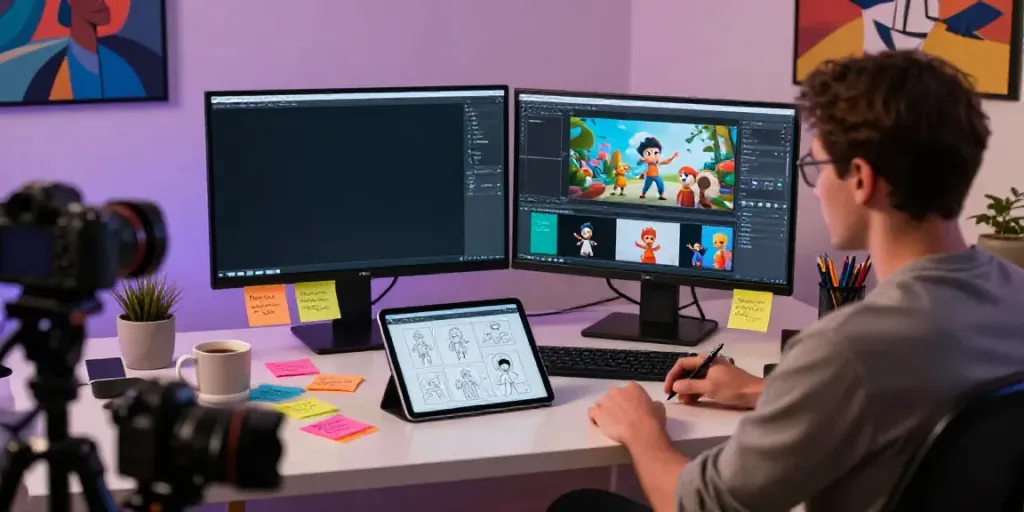
Setting Up Your Creative Workspace
Creating a conducive environment for video production can greatly enhance your workflow. Here are some tips:
- Create a Dedicated Space: A specific area for video creation helps you focus and minimizes distractions.
- Gather Necessary Tools: Ensure you have a good quality microphone, a reliable computer, and stable internet access.
- Familiarize Yourself with the Software: Take time to explore the features and functionalities of the AI tool you choose.
Initial Steps to Create Your First Video
Once you have chosen your AI animated video generator, follow these initial steps to create your first video:
- Define Your Concept: Outline the purpose and message of your video.
- Write the Script: Develop a concise script that will guide your animation.
- Select Characters and Scenes: Use the generator’s library to choose visuals that match your script.
- Animate: Utilize the tool’s features to bring your story to life.
- Review and Edit: Make necessary adjustments to ensure smooth transitions and clear messaging.
Effective Techniques for Crafting Engaging Animation
Storyboarding: Creating a Strong Narrative
A well-planned storyboard serves as the backbone of your animated video. It allows you to visualize the flow of the narrative, ensuring that each scene transitions seamlessly into the next. Consider the following when storyboarding:
- Visualize Key Scenes: Sketch out major scenes to understand how they connect.
- Timing and Pacing: Determine how long each scene should last to maintain viewer engagement.
- Focus on the Message: Ensure that your narrative aligns with your overall objective, whether it be to entertain, inform, or persuade.
Best Practices for Character Design and Animation
Character design is crucial for making your animations relatable and compelling. Here are best practices to keep in mind:
- Keep it Simple: Avoid overly complex designs; focus on clean and recognizable characters.
- Reflect Your Brand: Design characters that embody the personality of your brand or message.
- Use Emotions Wisely: Animated characters should express emotions that resonate with the audience.
Incorporating Music and Sound Effects for Impact
Sound plays a fundamental role in enhancing the storytelling experience of your animations. Properly selected music and sound effects can elevate the emotional quality of your video. Consider these tips:
- Choose Appropriate Music: Select tracks that match the tone and pacing of your content.
- Utilize Sound Effects: Incorporate sound effects to emphasize actions or events within the video.
- Balance Audio Levels: Ensure that voices, music, and effects are harmonized to not overpower one another.
Common Challenges and How to Overcome Them
Dealing with Technical Difficulties
Technical issues can disrupt your animation process. Here are ways to mitigate these challenges:
- Check System Requirements: Ensure your computer meets the specifications needed for the software.
- Seek Technical Support: Don’t hesitate to reach out to customer support if you encounter issues.
- Stay Updated: Regularly update your software to benefit from the latest features and fixes.
Maintaining Creativity Under Pressure
Creative blocks can hinder your ability to produce engaging content. Consider these strategies to maintain inspiration:
- Take Breaks: Sometimes stepping away from your work can provide fresh perspective.
- Engage with Other Creators: Collaborate or discuss ideas with fellow creatives to spark new concepts.
- Explore New Styles: Experimenting with different animation styles can reignite your creative passion.
Addressing Feedback and Iteration Processes
Receiving feedback is an integral part of the video creation process. Here’s how to handle it constructively:
- Be Open-Minded: Approach feedback with a willingness to improve your work.
- Focus on Specifics: Seek detailed feedback to understand what works and what doesn’t.
- Iterate: Don’t hesitate to make multiple revisions based on feedback to enhance the quality of your video.
The Future of AI Animation Technology
Emerging Trends in Animation Tools by 2026
The animation landscape is poised for significant transformation. Here are some trends to watch for in the upcoming years:
- Enhanced Personalization: AI will enable greater customization in animations, allowing for user-specific adaptations.
- Improved Interactivity: Expect more interactive elements within animated content, enhancing viewer engagement.
- Integration with AR/VR: AI animation tools will likely interface with AR and VR technologies, creating immersive experiences.
Predictions for AI's Role in Creative Industries
AI is set to redefine creativity across industries. Its capabilities will not only automate mundane tasks but also inspire new creative possibilities. We may see:
- A Collaborative Role: AI tools may work alongside human creators, providing suggestions or enhancing creativity.
- Rapid Prototyping: The speed at which ideas can be turned into animated content will significantly decrease, enabling faster product testing and iterations.
How to Keep Up with Technological Advancements
Staying ahead of technological advancements requires ongoing education and adaptation. Consider these approaches:
- Continuous Learning: Engage in online courses and webinars to enhance your skills and knowledge about new tools.
- Network with Professionals: Join communities of animators and AI experts to share insights and stay updated on trends.
- Experiment Regularly: Dedicate time to explore new tools and techniques, promoting innovation in your work.