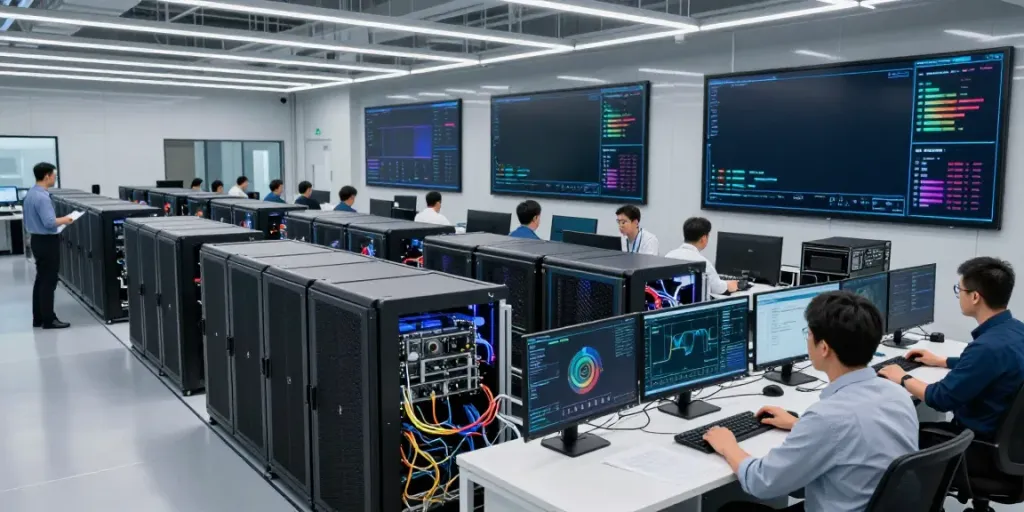
Understanding the Role of AI Data Centers
In today's rapidly advancing technological landscape, the need for robust infrastructure to support artificial intelligence (AI) applications has never been more critical. As organizations leverage AI to enhance their operations, the demand for specialized facilities—commonly known as AI data center—is on the rise. These centers are designed to accommodate the unique requirements of AI workloads, ensuring seamless training and deployment of machine learning models.
What is an AI Data Center?
An AI data center is a facility that houses the specific IT infrastructure necessary for training, deploying, and delivering AI applications and services. Unlike traditional data centers, which are optimized for general computing tasks, AI data centers are equipped with high-performance computing resources, including powerful GPUs and specialized hardware. This unique architecture enables them to handle the intensive computational demands associated with AI workloads.
The Need for Specialized Infrastructure
The growing complexity of AI tasks necessitates specialized infrastructure that can effectively support high-density computing and intensive data processing. AI models often require vast amounts of data to learn and improve, and traditional data centers may struggle to handle the sheer volume of computations needed. Consequently, establishing dedicated AI data centers becomes essential in meeting the demands of modern AI applications.
AI Workloads: Distinguishing Features
AI workloads exhibit distinct characteristics that differentiate them from more traditional computing tasks. These features include:
- High parallel processing: AI models, particularly deep learning networks, require parallel computation to process vast datasets simultaneously.
- Dynamic resource allocation: AI tasks may vary in their computational needs, requiring flexible resources that can adapt in real-time.
- Large-scale data management: AI workloads often engage with extensive data sets, necessitating effective data storage and management solutions.
Exploring AI Infrastructure Power Plans
As organizations seek to optimize their engagement with AI technology, understanding the structure of AI infrastructure power plans is crucial. These plans facilitate the allocation of necessary resources for AI data centers, ensuring that they operate efficiently and effectively. Participating in these plans not only supports the power needs of AI operations but also contributes to the overall AI ecosystem.
Types of AI Infrastructure Power Plans
Various AI infrastructure power plans cater to different operational needs, allowing organizations to select the most appropriate option based on their requirements. Common types include:
- Core Power Access: Basic access plans that provide the minimum required power for standard AI tasks.
- Enhanced Power Access: Intermediate plans that offer additional resources for more demanding applications.
- Advanced Power Access: Comprehensive plans designed for organizations requiring substantial computational power for complex AI projects.
Benefits of Participating in Power Plans
Engaging in AI infrastructure power plans yields numerous benefits, including:
- Optimized resource allocation: Plans ensure that power resources are effectively distributed according to workload demands.
- Cost efficiency: By aligning power consumption with actual usage, organizations can potentially reduce operational costs.
- Scalability: Power plans facilitate smooth transitions as organizations scale their AI operations.
Examples of Successful Implementations
Numerous organizations have successfully implemented AI infrastructure power plans to enhance their operations. For instance, companies in the healthcare sector leverage these plans to process large volumes of medical data for predictive analytics and personalized medicine, resulting in improved patient outcomes and operational efficiency.
Calculating Contribution Rewards in AI Data Centers
As organizations contribute to AI infrastructure through power plans, understanding the mechanisms behind contribution rewards is essential. These systems offer insights into how rewards are calculated based on power usage and AI workload performance.
How Reward Systems Work
Reward systems are structured to incentivize power participation. Rewards are determined by the amount of electricity an organization supports and the corresponding AI workloads processed. This transparent system ensures that contributors are fairly compensated based on their actual contributions to the AI ecosystem.
Measuring Power Contribution
Measuring power contributions involves recording the electricity supported by each plan and the associated AI workloads. By tracking this data, organizations can gauge their impact on the AI infrastructure and assess the effectiveness of their resource allocation.
Impact of AI Workloads on Rewards
The performance of AI workloads directly influences the rewards that organizations receive. Efficiently executed tasks with high output rates can lead to increased earnings, while subpar performance may result in lower rewards. This dynamic creates a motivating environment for organizations to continually optimize their AI operations.
Challenges in Managing AI Data Center Operations
Despite the numerous advantages of AI data centers, organizations face challenges in managing operations effectively. Understanding these obstacles is essential for successful implementation and long-term sustainability.
Common Obstacles and Misconceptions
Some common challenges include:
- Cost considerations: The initial investment in AI infrastructure can be substantial, leading to hesitance among organizations to fully embrace these solutions.
- Skill shortages: There is a growing demand for skilled professionals capable of managing AI workloads and data center operations.
- Misconceptions about AI: Many organizations may underestimate the complexity of AI tasks and the resources required to manage them effectively.
Best Practices for Efficiency
To mitigate challenges, organizations should adopt best practices such as:
- Conducting thorough assessments: Evaluating infrastructure needs and potential workload requirements can lead to better resource allocation.
- Investing in training: Providing employees with the necessary skills to manage AI technologies is crucial for operational success.
- Leveraging automation: Implementing automated systems for monitoring and managing workloads can increase efficiency and reduce human error.
Future Challenges and Opportunities
Looking forward, organizations must prepare for evolving challenges, including rapid technological advancements and changing regulations. However, these challenges also present opportunities for innovation and growth within the AI sector.
Future Trends in AI Data Centers and Infrastructure
The landscape of AI data centers is continually evolving, driven by emerging technologies and shifts in operational paradigms. Staying informed about these trends is crucial for organizations looking to remain competitive in the AI space.
Emerging Technologies to Watch in 2026
As we approach 2026, several technologies promise to reshape the AI data center landscape:
- Quantum computing: The advent of quantum computing could exponentially increase processing capacity, revolutionizing how AI workloads are handled.
- Edge computing: Bringing computation closer to the data source can reduce latency and improve real-time processing capabilities.
- AI-driven infrastructure management: Leveraging AI to optimize data center operations will enhance efficiency and reduce operational costs.
Sustainability and Environmental Impact
As awareness of environmental issues grows, AI data centers must prioritize sustainability. Implementing green technologies, such as renewable energy sources and energy-efficient cooling techniques, can significantly reduce their carbon footprint and promote responsible practices.
The Evolution of AI Services and Applications
As AI technology evolves, the services and applications it supports will expand significantly. From enhanced natural language processing to advanced machine learning capabilities, organizations must adapt to these changes to leverage new opportunities in the marketplace.
What is an AI data center?
An AI data center is a specialized facility designed to handle the specific computational requirements of AI models and applications. These centers provide the infrastructure necessary for developers and organizations to deploy AI solutions effectively.
Where are most AI data centers located in the US?
AI data centers are primarily located in tech hubs such as Silicon Valley, Seattle, and Austin, where access to skilled talent, technological innovation, and robust infrastructure is readily available.
Who is the largest AI data center?
The largest AI data centers are often operated by leading tech companies such as Google, Amazon, and Microsoft, which invest heavily in infrastructure to support their AI initiatives and services.
Why do we need AI data centers?
AI data centers are crucial for processing the vast amount of data required for training and deploying AI models, enabling organizations to leverage AI technology effectively and improve decision-making processes.
What does an AI data center look like?
Typically, an AI data center features rows of high-performance servers equipped with powerful GPUs, advanced cooling systems, and specialized hardware designed to optimize computational efficiency and power usage.